// get in touch

Write to the people who run FRSH.

Whether you are a curious classmate, a school administrator or a potential partner — your message reaches an Executive Director directly, not a ticket queue. We reply within a week, usually much faster.

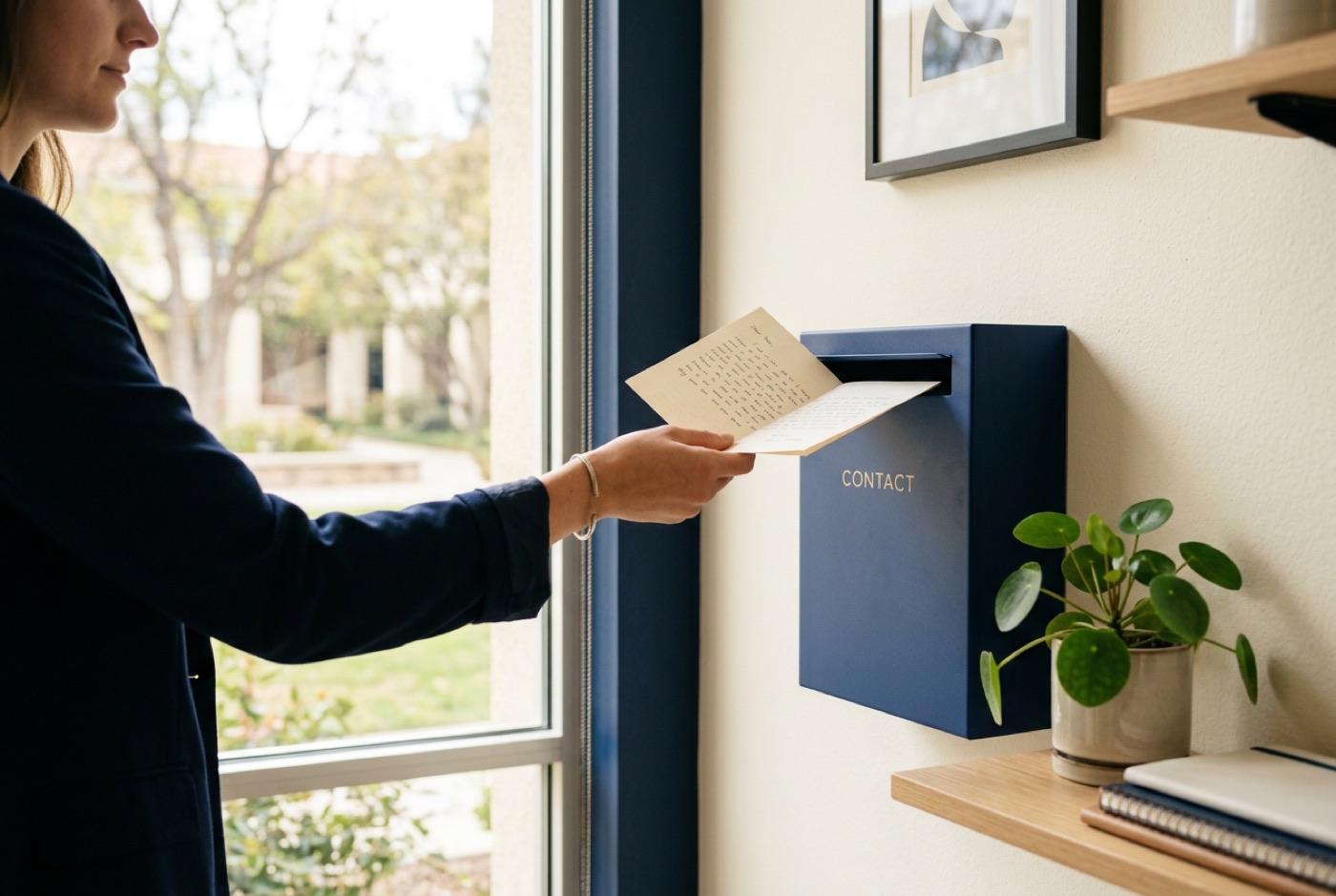
A hand delivering a folded letter into a matte navy wall mailbox beside a sunlit window and a small green plant
Every enquiry reaches a founder directly.
General enquiries

Talk to FRSH

Questions about the organisation, our pilots, or anything you read on this site.

hello@frsh.example
For students

Membership & chapters

Want to join, or start an FRSH chapter at your school? We will send the Chapter Playbook.

chapters@frsh.example
For schools & partners

Pilots & partnerships

Cafeterias, labs and campuses: let's discuss hosting a monitored pilot with full documentation.

pilots@frsh.example
// a promise on response

FRSH is run by students — we may not reply instantly, but every message gets read, and every serious partnership enquiry gets a considered answer from a founder directly.

// questions

Frequently asked.

What exactly is FRSH?
A pre-university, student-led non-profit with one job: turning everyday food waste into renewable energy through open education, monitored campus pilots and measurable impact. No products, no fees, no fine print.
Who is behind the work?
Two Executive Directors — Joanne leads the technical side, Matherine leads content — supported by student chapter members. Everything we publish is written by people who can explain it, not generated filler.
Is FRSH really free?
Yes. FRSH is a student-led non-profit. Every guide, workshop and toolkit we publish is free and open-source, forever.
Who can start a chapter?
Any student with a group of interested classmates and a supportive teacher or school. Our Chapter Playbook walks you through approval, recruitment and your first workshop.
Do we build a real digester?
Campus pilots do — with supervision and safety review. Members first learn the science, run waste audits, and progress to pilot projects with our documentation.
How is impact measured?
Kilograms of waste diverted and kilowatt-hours recovered, logged by each chapter and published quarterly. Impact is our only scoreboard.